
-
Games
Total materials on the site: 32130View all games 279
-
Slay The Spire II
-
Mods
8 with 2 for Slay The Spire II
Slay the Spire 2: Beginner's Guide — Where to Start
Slay the Spire 2 entered Early Access on March 5, 2026 and immediately became the biggest indie hit of the year. If you keep dying in Act 1 over and over again — do not panic, that is normal. The game is intentionally harsh, and that is exactly why we wrote this guide.
What is actually happening: the basics in two minutes
Slay the Spire 2 is a card-based roguelike. Each run starts from scratch: you choose a character and climb the Spire through three acts, defeating enemies in turn-based battles. The combat system is simple: you have 3 energy per turn, draw 5 cards from your deck, and spend energy to play them. Then the enemy takes its turn — and the cycle repeats.
Between battles the map contains different nodes: regular enemies, Elites (harder but they grant relics), Campfires, Merchants, Chests, and Question Marks (events). At the end of every act there is a Boss. Defeat all three — and the run is completed. Die — and you start again, but with accumulated progress in the Epoch system, which gradually expands the pool of cards and relics available in future runs.
Which character to pick first
The game features five heroes, and they are not all available immediately — each new one unlocks after completing a run with the previous character (it does not have to be a successful run).
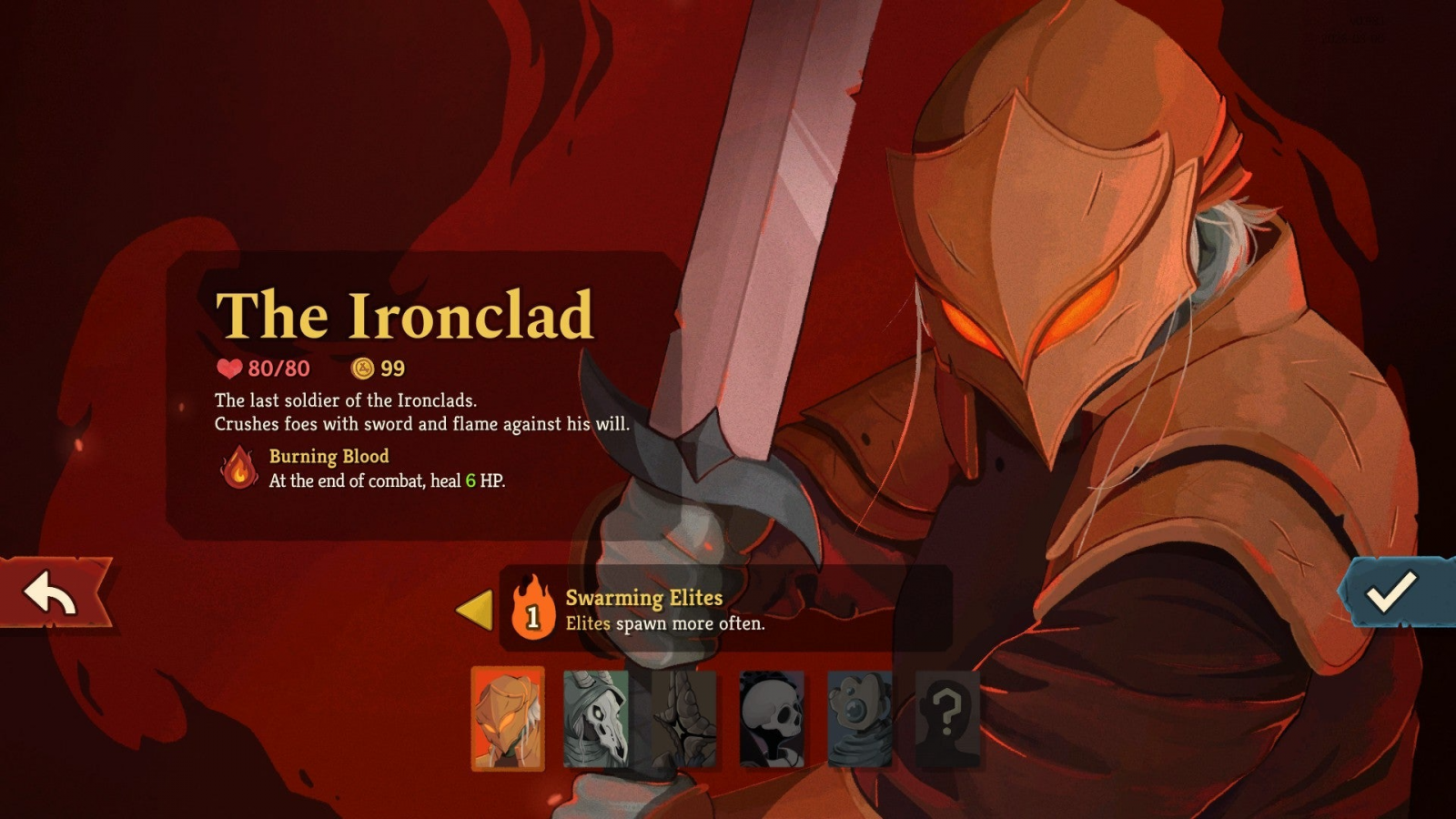
Ironclad — the best starting choice. He has 80 HP and the relic Burning Blood, which restores 6 HP after every battle. This makes him the most forgiving character: small mistakes will not instantly ruin your run. His mechanics are straightforward — build Strength and hit hard.
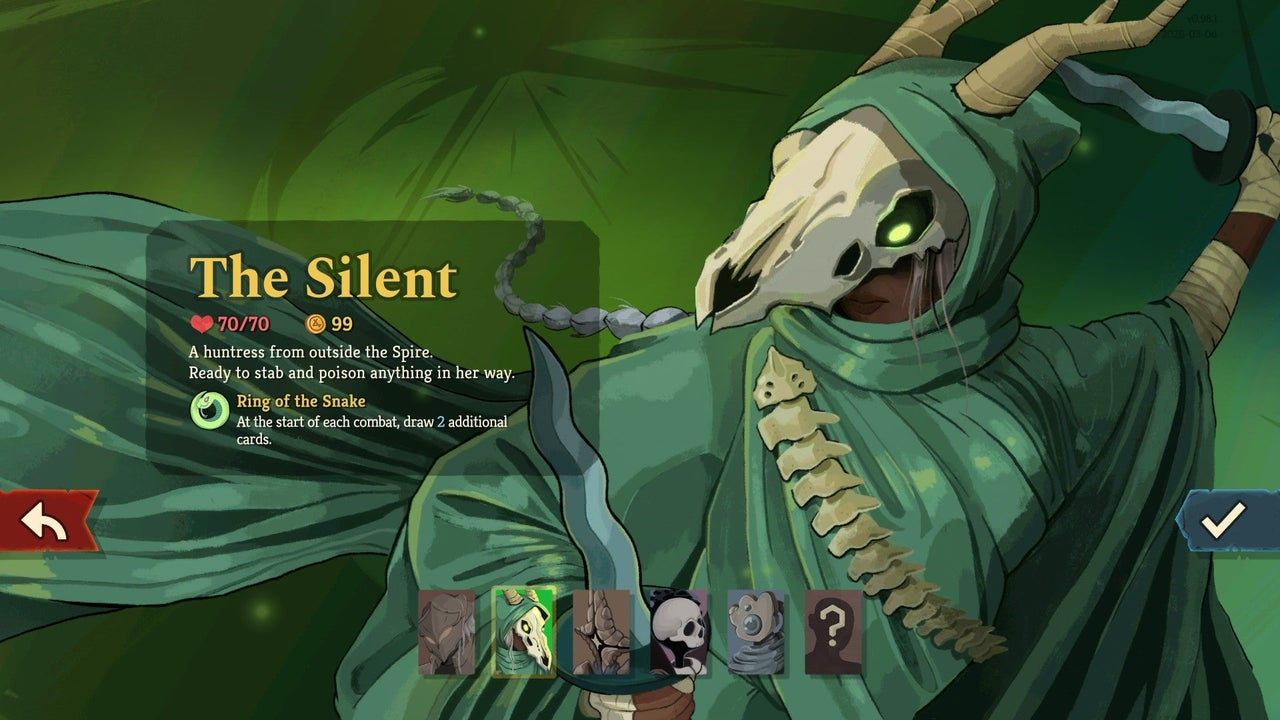
Silent — medium difficulty. Relies on poison and Shiv mechanics, and requires a clear understanding of the archetype already in the first act.
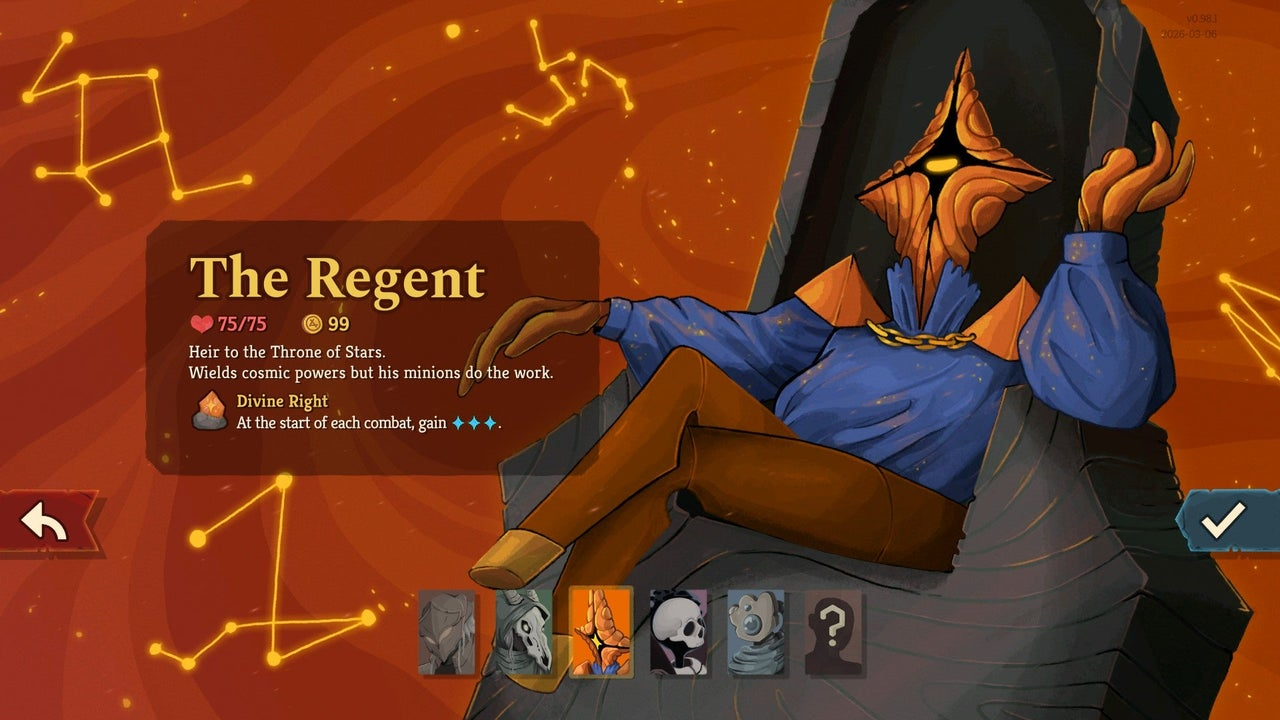
Regent — a new character with the Stars resource and the Forge mechanic. Interesting to play, but requires patience: stars accumulate for several turns before the deck reaches its full potential.
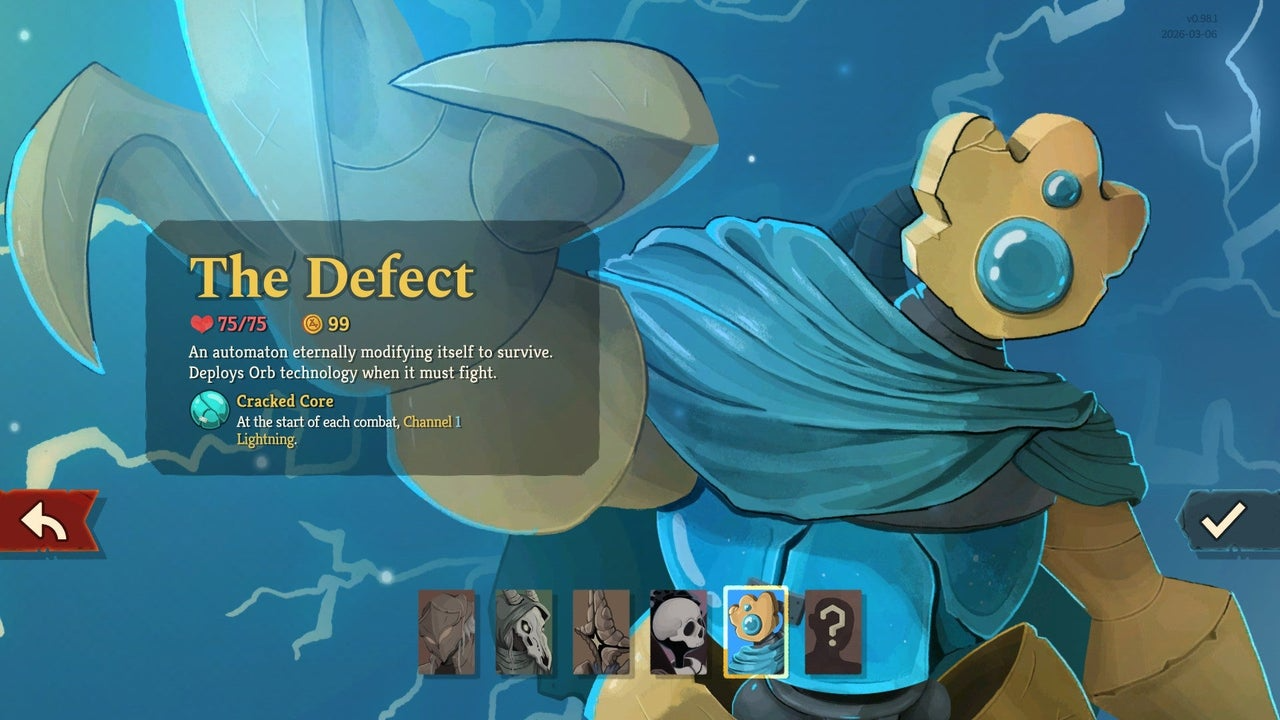
Defect — advanced difficulty. Built around orb mechanics and requires careful card selection throughout the entire run.
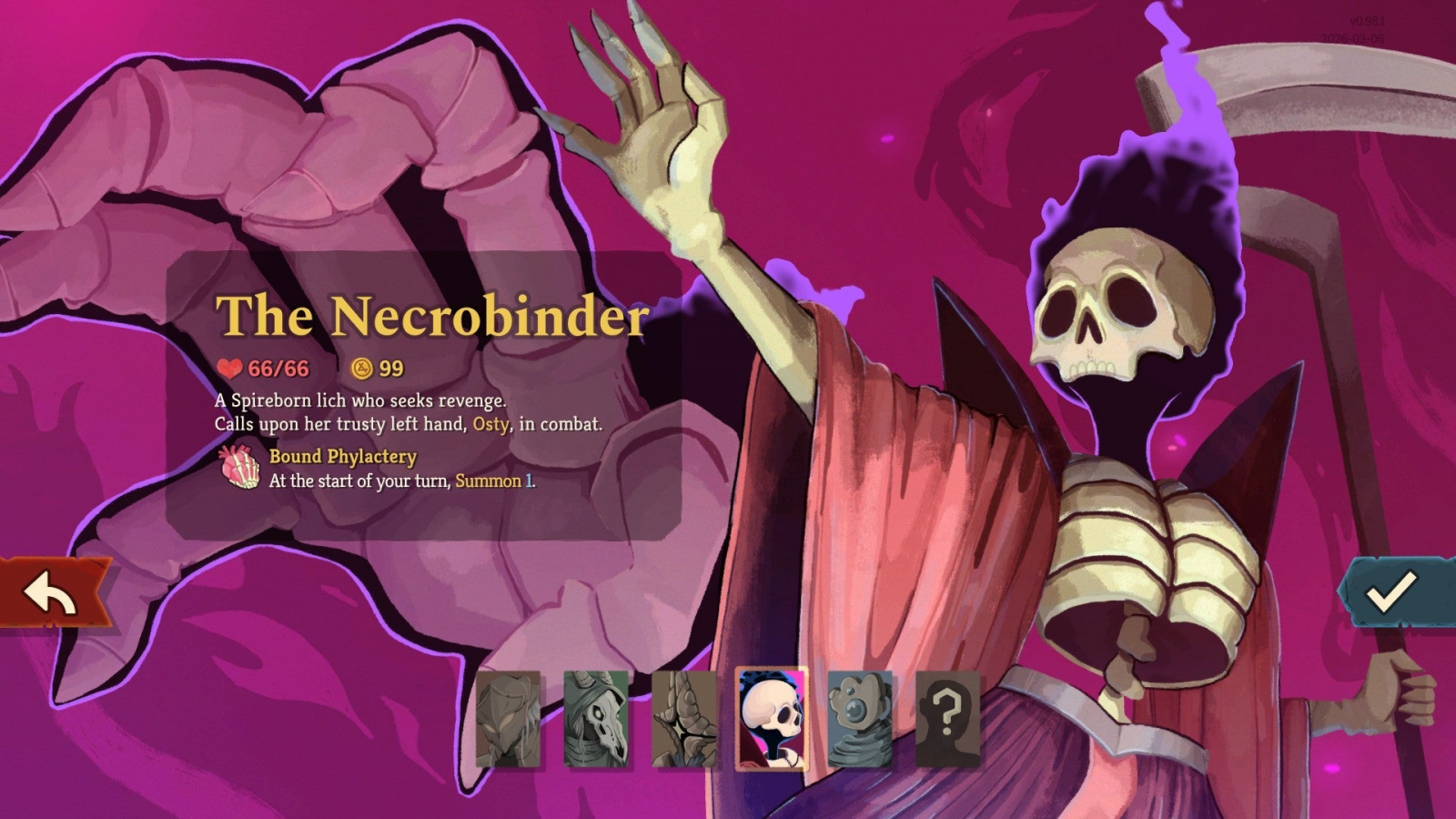
Necrobinder — the most difficult character. A necromancer with a skeletal companion hand named Osty, only 66 HP, and mechanics based on Doom and Blood Magic. Not recommended for the first runs. The recommended order for learning the game is: Ironclad → Silent → Regent → Defect → Necrobinder.
The main rule: a small deck is better than a big one
This is the most important idea in Slay the Spire 2, and the one beginners realize the latest. After every battle the game offers you a card to add to your deck. Many players take everything — and that is a mistake. The larger your deck becomes, the less often you draw the cards you actually need. The ideal deck size by the end of a run is 20–25 cards that work well together.
The “Skip” button is not a weakness — it is often the best decision. If a card does not fit your current strategy, simply do not take it.
How to read the map and build a route
Victory in Slay the Spire 2 is 50% combat and 50% correct navigation. Before choosing the first room, look at the entire map from top to bottom. First — immediately check which boss awaits you at the end of the act. This determines which cards and relics should be prioritized.
Second — look for routes that pass through a Campfire before fighting an Elite. Campfires provide either 30% healing or a card upgrade — and that is a massive power spike. Early in the run it is usually better to upgrade cards rather than heal. Your HP is a resource; any point above zero is technically spare.
Third — do not avoid Elites. They are harder than regular enemies, but they grant relics — the most powerful source of strength in the game. The goal in Act 1 is to defeat 2–3 Elites.
Combat basics: offense and defense
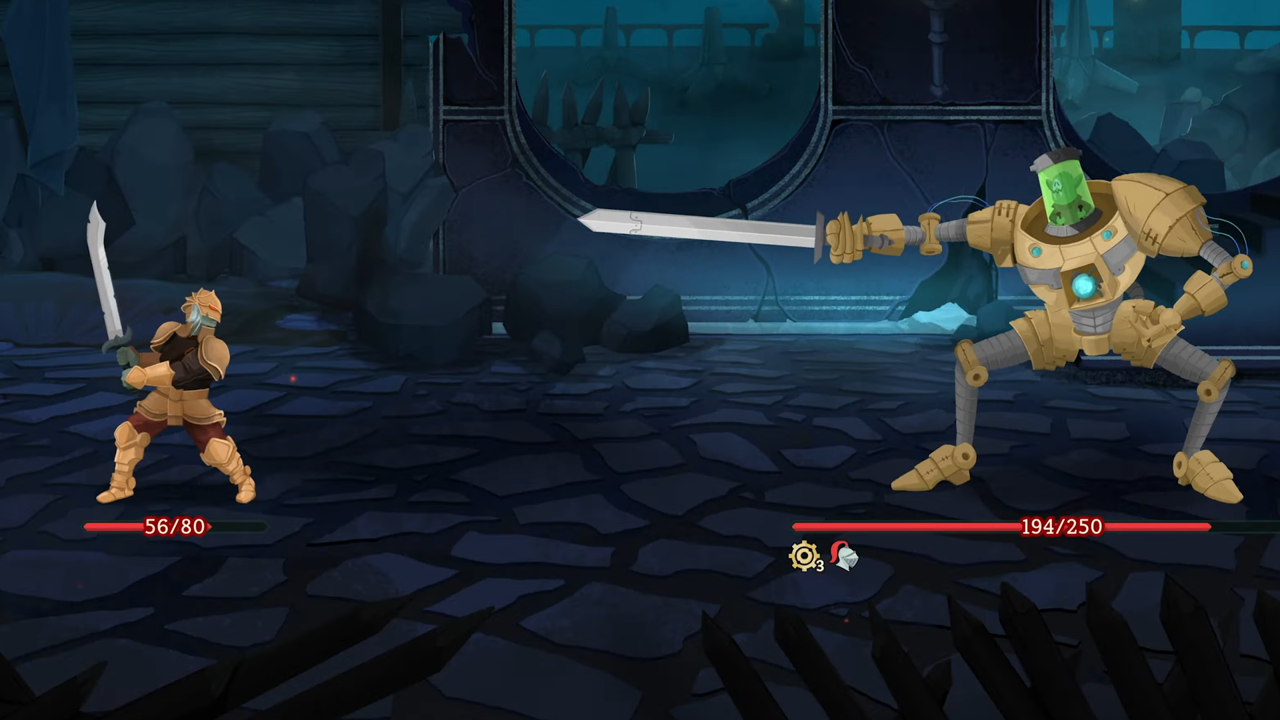
Read enemy intentions — the icons above their heads show what they will do on the next turn. If an enemy is attacking, play enough block cards. If the enemy is preparing to buff or defend, that is your window for aggression — spend all your damage cards. Do not save potions for the final boss. Use them in Elite fights to reduce HP loss — that is more important than keeping a potion for later.
New mechanics that were not in the first game
If you are familiar with the original Slay the Spire, here is what has changed:
- Alternative acts. Each act now has two path variants. In Act 1 these are Overgrowth (overgrown ruins with forest creatures) and Underdocks (water channels filled with mutants). Different enemies, events, and relics significantly increase run variety.
- Enchantments. A new system of permanent card modifications applied during a run. Some enchantments drastically change how a card works — read them carefully.4-player co-op. You can now climb the Spire with friends. The route is chosen together and some resources are shared. More details are available in our co-op guide.
- Colorless cards are stronger now. Mega Crit expanded the pool of colorless cards — they are available to any character and are often purchased from the Merchant. Do not ignore them.
Three mistakes that ruin early runs
The most common mistakes that lead to defeat:
- Taking a card after every battle. As mentioned earlier: fewer cards mean a more consistent deck.
- Forcing a specific archetype from the very beginning. Do not enter a run with a rigid plan like “I must build a poison deck.” In Act 1, take cards that are useful immediately — AoE attacks, reliable block. Start focusing on a specific build in the second half of Act 1.
- Avoiding Elites just to preserve HP. Without relics you will reach the Boss too weak. Elites are risky, but victory without them is unlikely.
Where to start right now
Start the game with Ironclad. In your first 3–5 runs, simply learn the mechanics — do not try to win. Read enemy intentions before every play. Plan routes from Campfire to Elite, not the other way around. Take only the cards that synergize with what is already in your deck. Once you get comfortable — move on to the best builds guide for each character and the hero tier list.
All endings in Cyberpunk 2077: the best, the worst, and the secret
- 7564
- 0
- 18 dec 2020
Comments 0
Rules for writing comments. For non-compliance - ban!
- Use of profanity (mat) in messages
- Communication is not on the topic of the material
- Any insults of other participants, including the author of the material
- Writing messages in whole or in part in CAPITAL letters (Caps Lock)
- Expressing your opinion without supporting it with arguments
- The use of links to third-party sites, or the use of images/videos/other content containing the aforementioned links
Messages that violate these rules will be deleted, and malicious violators - deprived of the ability to add comments on the site!